Ownership Drives Outcomes: Estate Planning Considerations for Personal Assets
Sep 08, 2026

A previous blog focused on the fact that the first step in an estate plan is to take inventory of all your assets and note how they are owned. Now that you have ascertained that you are the personal owner of several assets, it’s important to determine the nature of that ownership. Note that the concepts discussed in this blog apply to all provinces other than Quebec.1
Ownership structure can significantly affect how an asset is dealt with on death. This includes whether the asset forms part of your estate and is therefore governed by the terms of your will, or whether it passes directly to a beneficiary outside your estate and cannot be dealt with under your will. This can affect both the administration of your estate and the ultimate distribution of your assets.
Solely owned assets
Solely owned assets are registered in your name alone. These assets form part of your estate and generally require probate to permit your estate representative to deal with them.
Exceptions include solely owned assets that permit beneficiary designations, such as Registered Retirement Savings Plans (RRSPs), Tax-Free Savings Accounts (TFSAs) and life insurance. Assets with a valid designation to one or more beneficiaries bypass your estate and transfer (or pay proceeds directly) to the beneficiary. Regularly reviewing beneficiary designations helps ensure they remain up to date and reflect your current wishes.
Jointly owned assets
You can jointly own an asset in one of two ways:
- Joint with right of survivorship
- Tenants-in-common
Assets are treated differently on death depending on the form of joint ownership, so it’s critical to understand which one applies.
Joint with right of survivorship
Joint with right of survivorship means each owner has an equal, undivided interest in the entire asset. When an owner dies, the asset passes to the surviving owner outside the deceased owner’s estate. Spouses commonly use this form of joint ownership for homes and joint bank accounts.
There may be exceptions to the treatment of an asset held jointly with right of survivorship. These exceptions are particularly common for assets held jointly by parents and adult children, where it may be necessary to take a closer look to determine whether the intention was for ownership to be truly shared or whether a person’s name was added to the account solely for convenience. A future blog will discuss the consequences when people register an asset jointly merely for convenience.
Tenants-in-common
With tenants-in-common, each owner has a specified percentage interest in the asset, which may be equal or unequal. Since each owner owns a specific share of the asset, they can dispose of their interest independently. If owned at death, their interest forms part of their estate.
To mitigate the potential for dispute between co-owners, it’s prudent for them to enter into a co-ownership agreement that addresses what happens to each party’s interest in the asset if they no longer wish to own it and when they die.
Understanding ownership details is essential
How you personally own assets can have significant implications for estate planning, probate and asset distribution on death. To summarize:
- Sole ownership provides complete control during your lifetime, but unless the asset can have a beneficiary designation it generally forms part of your estate on death
- Joint ownership with right of survivorship can allow ownership of the entire asset to pass directly to the surviving owners outside your estate
- Tenancy-in-common gives each owner a distinct interest in the property, with your interest forming part of your estate on death
Understanding these ownership structures and the associated legal consequences is essential to ensure assets transfer in accordance with your intentions and overall estate planning objectives.
1 This blog is not intended for use in Quebec since some of the concepts discussed may not be applicable or may differ under the Civil Code of Quebec.
About the Author
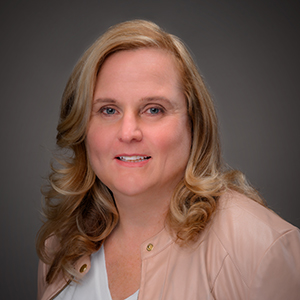
Valerie Markidis
As a Wealth Planning Consultant with CI Assante Private Client's Wealth Planning Group, Valerie works closely with our team to provide solutions for our clients in the intergenerational transfer of wealth, with a focus on estate planning. Valerie joined CI Assante in 2022, bringing 14 years of experience at two major trust companies, where she held national responsibility for Wills and actively supported advisors across Canada with questions and interpretations related to Wills, Powers of Attorney and Trusts.
Prior to her tenure with the trust companies, Valerie worked in private practice, where wills and estates were some of her key focus areas. She is lawyer with a Bachelor of Law degree from Osgoode Hall Law School and an Honours BA from Queen’s University.