August 27, 2026
Beyond Artificial Intelligence (AI): Where We See Opportunities Around the World

Alfred: Karen, you are not new to me obviously, but your name may be new to the audience. Can you introduce yourself?
Karen: Sure. I'm Karen Xue, Director of Multi-Asset Research at CI Global Asset Management.
I've been with CI since 2021. Before joining CI, I worked at one of the major Canadian banks, where I focused on asset-liability analytics and interest rate risk management. I studied Finance at Wilfrid Laurier University and am also a CFA charterholder.
Today, my role is focused on asset allocation research, translating macro developments and market trends into portfolio positioning recommendations across asset classes.
Alfred: I am always curious how people get into the investment world. Before we talk about investments, can you share your story?
Karen: I've always been fascinated by how people make decisions in information-rich environments.
Early on, I thought quantitative research would be the right path because I enjoyed analytical problem-solving. But over time, I realized investing presents an even more interesting challenge. Every day you're processing information from different disciplines, often with incomplete data and constantly changing expectations.
What I've learned is that success doesn't come from having the most information. It comes from knowing what information matters, having a framework to interpret it and being willing to change your mind when the facts change.
Building those frameworks and continuously refining them is what drew me into investing, and it's still the part of the job I find most rewarding today.
Alfred: Excellent. Earnings season is underway. Can you tell us how companies have done and what to expect in the coming quarters?
Karen: So far, earnings season has been very strong. S&P 500 earnings are up roughly 50% year-over-year, while revenue growth is running around 15%.
The encouraging part is that the strength has been fairly broad-based, with nearly 90% of companies meeting or exceeding expectations.
Technology remains the clear leader, driven by ongoing artificial intelligence (AI) investment and demand for digital infrastructure. Energy has also been a standout, benefiting from geopolitical uncertainty and stronger commodity prices. Communication Services has posted strong results as well, although much of that strength remains concentrated in a handful of mega-cap platform companies.
Looking ahead, I think the focus shifts from results to confirmation. Earnings have been strong and, in many cases, are validating the AI investment story. The market is now looking for reassurance that those growth drivers remain durable and can continue supporting earnings over the next several quarters.
Alfred: This quarter, despite solid earnings, we have seen big swings in Korean markets and shares of semiconductors. What caused this and what are your general thoughts on artificial intelligence (AI)?
Karen: I think the volatility had more to do with positioning than fundamentals.
Going into July, AI and semiconductor stocks had rallied very quickly, investor positioning had become crowded and expectations were extremely high. The correction helped reset some of that excess.
What's notable is that the pullback occurred even as earnings remained strong and AI-related demand remained robust. From my perspective, the correction reflected a market that had gotten ahead of itself rather than a deterioration in the underlying fundamentals.
More broadly, I continue to view AI as an important long-term investment theme. The opportunity is real, but markets rarely move in a straight line. In some ways, the recent volatility has left the sector on firmer footing, with valuations, positioning and expectations looking healthier than they did earlier this summer.
Alfred: Everyone seems to focus too much on the U.S. and South Korea. What other countries do you favour and why?
Karen: We continue to see attractive opportunities in several markets.
We remain constructive on Japan, supported by a favourable policy backdrop, corporate governance reforms and meaningful exposure to the AI supply chain through automation and advanced manufacturing.
We also see opportunities in Canada, where energy and gold provide resilience in a more uncertain geopolitical environment.
More broadly, we’re constructive on select emerging markets. Countries such as Brazil are benefiting from improving inflation dynamics and a more accommodative policy backdrop. Meanwhile, we’re also seeing attractive opportunities where fundamentals remain solid, but expectations are less demanding than in some of the more crowded parts of the market.
Alfred: Finally, how are our portfolios positioned by country and sector?
Karen: Our portfolios remain well diversified across regions and sectors, with a continued emphasis on balance, risk management and long-term risk-adjusted returns.
At a regional level, we've remained constructive on Canada, Japan and select emerging markets. Earlier this year, we became more cautious on South Korea and later reduced exposure to parts of the U.S. market as valuations, investor positioning and expectations became increasingly stretched, particularly in areas linked to the AI theme.
On the sector side, we've favoured Energy, Financials and Healthcare, while maintaining an underweight position in Technology and Consumer Staples.
Importantly, our more cautious positioning in Technology and South Korea reflected valuation and portfolio construction considerations rather than a deterioration in the long-term fundamental outlook. As we've seen over the past few months, the market correction has helped improve the risk-reward profile, while earnings and AI-related demand have remained resilient.
As market conditions continue to evolve, we remain prepared to reassess our positioning as fundamentals, valuations and investor positioning change.
Overall, we're positioned to participate in long-term growth opportunities while maintaining diversification and avoiding excessive concentration in any single country, sector or investment theme.
Alfred: This is great. Thank you very much, Karen.
About the Author
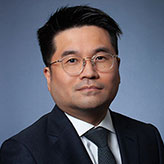
Alfred Lam, Senior Vice President, Co-Head of Multi-Asset, joined CI GAM in 2004. He brings over 23 years of industry experience to his portfolio design, asset allocation, portfolio construction, and risk management responsibilities, which include chairing the multi-asset investment management committee and sizing investment bets to drive added value and manage risk. Alfred holds the CFA designation and an MBA from York University Schulich School of Business.
GLOSSARY:
Return (risk-adjusted): A measure of investment performance taking into consideration how much risk/volatility was assumed to generate it. Consider two investments, both of which return 10% over a given time period. The investment with the greater risk-adjusted return would be the one that experienced less price fluctuation. Two of the most commonly used measures of risk adjusted returns are Sharpe and Sortino ratios.
Volatility: Measures how much the price of a security, derivative, or index fluctuates. The most commonly used measure of volatility when it comes to investment funds is standard deviation.
IMPORTANT DISCLAIMERS
This document is provided as a general source of information and should not be considered personal, legal, accounting, tax or investment advice, or construed as an endorsement or recommendation of any entity or security discussed. Every effort has been made to ensure that the material contained in this document is accurate at the time of publication. Market conditions may change which may impact the information contained in this document. All charts and illustrations in this document are for illustrative purposes only. They are not intended to predict or project investment results. Individuals should seek the advice of professionals, as appropriate, regarding any particular investment. Investors should consult their professional advisors prior to implementing any changes to their investment strategies.
Certain statements in this document are forward-looking. Forward- looking statements (“FLS”) are statements that are predictive in nature, depend upon or refer to future events or conditions, or that include words such as “may,” “will,” “should,” “could,” “expect,” “anticipate,” “intend,” “plan,” “believe,” or “estimate,” or other similar expressions. Statements that look forward in time or include anything other than historical information are subject to risks and uncertainties, and actual results, actions or events could differ materially from those set forth in the FLS. FLS are not guarantees of future performance and are by their nature based on numerous assumptions. Although the FLS contained herein are based upon what CI Global Asset Management and the portfolio manager believe to be reasonable assumptions, neither CI Global Asset Management nor the portfolio manager can assure that actual results will be consistent with these FLS. The reader is cautioned to consider the FLS carefully and not to place undue reliance on FLS. Unless required by applicable law, it is not undertaken, and specifically disclaimed that there is any intention or obligation to update or revise FLS, whether as a result of new information, future events or otherwise.
The opinions expressed in the communication are solely those of the author(s) and are not to be used or construed as investment advice or as an endorsement or recommendation of any entity or security discussed.
Certain statements contained in this communication are based in whole or in part on information provided by third parties and CI Global Asset Management has taken reasonable steps to ensure their accuracy. Market conditions may change which may impact the information contained in this document.
Certain names, words, titles, phrases, logos, icons, graphics, or designs in this document may constitute trade names, registered or unregistered trademarks or service marks of CI Investments Inc., its subsidiaries, or affiliates, used with permission. All other marks are the property of their respective owners and are used with permission.
CI Global Asset Management is a registered business name of CI Investments Inc.
©CI Investments Inc. 2026. All rights reserved.
Published August 27th, 2026
